⚠️ Every post begins with a question and grows from my ongoing search to know God and understand His purpose for humanity. What you read here reflects my current view—born from study and wonder—and I often revisit and update my writings as I continue to learn and see more clearly.
The name of Jesus may be the most recognized name in human history—spoken, sung, invoked, disputed, revered, and carried across cultures and centuries. Promised as the Anointed One and anticipated as Immanuel, He was already known and long expected before His birth.
For the last two millennia, no name has carried more weight, stirred more devotion, or crossed more linguistic and cultural boundaries than Jesus. Whether spoken as Yeshua, Iēsous, Jesús, Jesus, or countless other renderings, the name itself has echoed through history with unparalleled influence.
Millions of songs have been written about His name. Lyrics that proclaim its beauty, its power, its sweetness. One of the most famous modern declarations sings, “What a beautiful name it is, the name of Jesus Christ, my King.”
But a question lingers beneath such praise: are we celebrating the sound of the name, or the fullness of what the name declares?
This article is an invitation to pause and reconsider what we mean when we say “in the name of Jesus.” To move beyond carrying the name as a badge, and into drawing life from everything it holds.
To recognize that His name gathers up everything He is—His life, authority, union with the Father, victory over death, and the fullness of God’s promises—now freely given to us as the great Yes of God (2 Corinthians 1:20).
If we are to pray in His name, we must first know what that name carries.
Yeshua – Hebrew Meaning
1 – Names in Ancient Hebrew Culture
In modern culture, a name is often a preference, something that identifies a person but doesn’t necessarily interpret them.
In the ancient Hebrew worldview, a name disclosed identity, essence, destiny, and relational purpose. To know a name was to perceive who someone truly was—often in relation to God, family, or covenant.
That’s why Scripture repeatedly treats names as weighty realities:
- To “call upon the name” of someone is to appeal to the person and what they embody (e.g., Genesis 4:26; Psalm 116:4).
- God “revealing His name” is not God handing out a label—it is God unveiling who He is and how He will be known (Exodus 3:14–15).
- A “good name” is integrity, reputation, and essence (cf. Proverbs 22:1).
This is why names in Scripture often feel like compressed theology, a short word that carries a long story. And this is why the Bible can speak of God acting “for His name’s sake” (e.g., Psalm 23:3; Ezekiel 36:22): not for vanity, but because His revealed identity—His faithfulness and covenant love—must remain consistent with who He is and does.
So when the New Testament speaks of “the name of Jesus,” it is speaking in this older, thicker sense: identity + authority + mission + presence.
Footnote: Names That Carried Essence and Destiny — and Names That Were Changed. 👉 1
“A name is a form of prophecy.”
The Talmud (Berakhot 7b)
2 – The Name Above All Names
The starting point for recognizing the name Jesus is to see it as a deliberate union of two Hebrew words—YHWH and yāšaʿ—together unveiling His manifest destiny; let us begin with the name YHWH (rendered Jehovah in English).
- YHWH: Presence and Being
The divine name יהוה (YHWH) often rendered “LORD” (capital letters) in English Bibles, functions in Scripture as God’s covenant self-disclosure.
Ancient Jews avoided vocalizing it out of reverence, substituting it with “Adonai” (Lord) or “HaShem” (The Name).
In Exodus, God does not define Himself by a title, but by a kind of ever-present being:
“I AM WHO I AM” (Exodus 3:14)
“Say this to the people of Israel: ‘I AM‘ has sent me to you.’” (Exodus 3:14)
“This is my name forever…” (Exodus 3:15)
In other words, YHWH is not merely “God’s proper noun.” It communicates that God is the One WHO IS—the One who is present, the One who is what is needed in every moment.
Because Jesus’ name is derived from YHWH, its meaning is already established: salvation is the self-expression of God in action.
- yāšaʿ: Salvation
The Hebrew verb יָשַׁע (yāšaʿ) means to rescue, deliver, liberate, bring into safety, restore from distress.
In the Hebrew Bible, yāšaʿ language commonly shows up in contexts like:
- deliverance from enemies and oppression
- rescue from danger and death
- liberation from captivity/exile
- relief from affliction and crushing trouble
- restoration into safety, wholeness, and peace
How This Becomes the Name Yeshua / Yehoshua
Yeshua (יֵשׁוּעַ) is a shortened form of Yehoshua (יְהוֹשׁוּעַ) (Joshua).
Hebrew Yeshua → Greek Iēsous → English Jesus
The name carries the confession:
- YHWH + yāšaʿ → “The I AM is salvation, deliverance, restoration.”
So when the angel says:
“You shall call his name Yeshua (יֵשׁוּעַ), for he will save (sōzō) his people from their sins.” (Matthew 1:21)
Sōzō (σῴζω): the Greek verb commonly translated “save,” which also means to heal, to make well, to make whole; to rescue, deliver; to preserve or keep from ruin.
Matthew is doing something both deliberate and deeply Jewish: he takes a Hebrew name already saturated with meaning and explains it using the Greek verb that conveys the same reality.
Matthew 1:21 declares an unambiguous truth: God Himself is salvation—and He will save, in the full and comprehensive sense that salvation implies.
Thus, in the Septuagint, the Hebrew verb yāšaʿ is consistently rendered by the Greek verb sōzō, making sōzō the established Greek expression for salvation.
If prayer in the name of Jesus is grounded in the reality that His name gathers up all that He is—His promises, truth, wisdom, authority, and life—then it follows that such prayer requires understanding. To pray “in His name” is to pray in conscious alignment with His revealed identity and purpose.
The name of Jesus is a theological confession, carrying within it the fullness of God’s intent made known in Christ. Only as we grow in our knowledge of who He is can our prayers faithfully reflect the depth, confidence, and expectation that His name itself authorizes.
For a deeper look at how sōzō functions, read: Eternal Redemption vs. Experienced Salvation
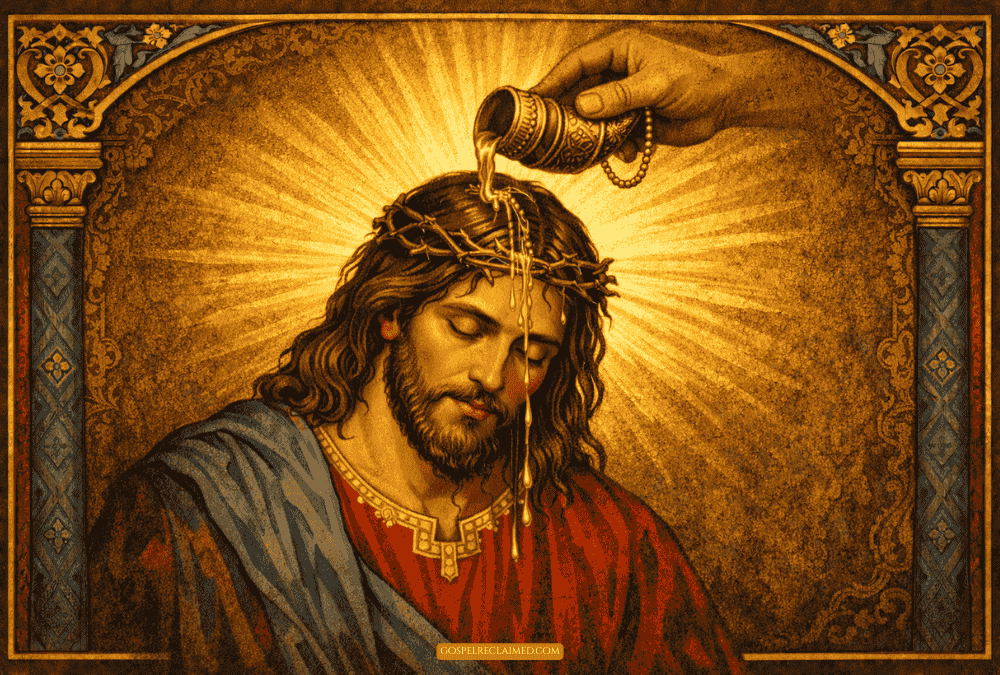
Messiah – The Anointed One
“We have found the Messiah (which means Christ).” – John 1:41
Messiah comes from the Hebrew מָשִׁיחַ (māšîaḥ), meaning anointed one; Christ comes from the Greek Χριστός (Christos), its direct equivalent.
In the biblical world, anointing signified divine appointment—particularly of kings, priests, and prophets—those set apart to act on God’s behalf.
“God anointed Jesus of Nazareth with the Holy Spirit and with power.” — Acts 10:38
The Old Testament consistently promises a coming Anointed One who would embody all three roles: king, priest, and prophet.
Isaiah professied His coming:
“The LORD (YHWH) has anointed me to bring good news to the poor…” — Isaiah 61:1
Jesus later quotes this passage explicitly, applying it to Himself and declaring its fulfillment:
(Luke 4:18–21)
- Jesus as King (the Anointed Davidic Ruler)
2 Samuel 7:12–13 – “I will raise up your offspring after you… and I will establish the throne of his kingdom forever.”
Additional supporting verses are listed in the footnotes: 👉 2
- Jesus as Priest (the Anointed Mediator)
Psalm 110:4 – “You are a priest forever after the order of Melchizedek.”
Additional supporting verses are listed in the footnotes: 👉 3
- Jesus as Prophet (the Anointed Word of God)
Deuteronomy 18:15 – “The LORD your God will raise up for you a prophet like me from among you.”
Additional supporting verses are listed in the footnotes: 👉 4
To pray in the name of Jesus the Christ is therefore to declare that these promises converge in Him. He is the long-awaited Anointed One in whom God’s kingship, presence, and redemptive purpose are fully revealed and fulfilled.
Immanuel – The Ever-Present One
Immanuel means “God with us.” This name announces the most radical promise of all: that God would not remain speaking only through prophets or symbols, but would enter human history and dwell among His people.
Isaiah first speaks this promise – a revelation of God’s intent to be present with humanity.
“Behold, the virgin shall conceive and bear a son, and shall call his name Immanuel.” — Isaiah 7:14
Isaiah later expands this vision, describing a child whose identity and reign transcend ordinary kingship (Isaiah 9:6–7).
The Gospel of Matthew explicitly identifies Jesus as the fulfillment of this promise:
“They shall call his name Immanuel (which means, God with us).” — Matthew 1:23
In Jesus, God inhabits creation, revealing that His ultimate purpose has always been presence, communion, and shared life with humanity.
Yet an even more radical dimension of Immanuel is revealed—not merely God among humanity, but God within humanity. John describes this reality in theological language:
“And the Word (Logos) became flesh and dwelt (skēnoō) among (en) us.” — John 1:14
The Greek construction (skēnoō en) conveys the idea of God making His tabernacle in us, expressing more than physical nearness; it denotes shared life and an abiding, indwelling presence.
The incarnation is God fully assuming human life, uniting divinity and humanity without separation.
“I in them and you in me, that they may become perfectly one…” — John 17:23
“In that day you will know that I am in my Father, and you in me, and I in you.” — John 14:20
Paul proclaims:
“Christ in you, the hope of glory.” — Colossians 1:27
Prayer, then, does not arise from distance or even mere nearness, but from union with Jesus Himself.
Logos – The Living, Divine Expression
In the first-century world, Logos did not a collection of sacred words. It referred to the rational, expressive principle through which reality is known and held together.
In Greek thought, logos described reason, coherence, and purposeful expression; in Jewish-Greek contexts, it pointed to God’s self-disclosure—God made knowable without being reduced to form or speech alone.
When the New Testament speaks of Jesus as the Logos, it is identifying Him with God’s living self-expression.
John opens his Gospel with this cosmic claim:
“In the beginning was the Logos, and the Logos was with God, and the Logos was God” — John 1:1
He continues:
“And the Logos became flesh…” — John 1:14
The author of Hebrews echoes this reality, describing the Son as the exact expression of God’s being (Hebrews 1:3), and Paul likewise affirms that in Him all the fullness of God was pleased to dwell (Colossians 1:19).
God’s Logos is not words written down, nor the Bible. To pray in the name of the Logos, therefore, is to acknowledge that Jesus embodies and reveals God’s meaning, purpose, and communicative presence within humanity.
Jesus – The Supreme King and Lord
The title “King of kings and Lord of lords” is a claim of supreme and unrivaled authority. In the biblical world, kings and lords represented delegated power—all authority exercised by others ultimately derives from and is accountable to Him.
The Old Testament already reserves this language for God-Head Himself:
“For the LORD your God is God of gods and Lord of lords, the great, the mighty, and the awesome God.” — Deuteronomy 10:17
The New Testament applies this same title directly to Jesus:
“He who is the blessed and only Sovereign, the King of kings and Lord of lords.” — 1 Timothy 6:15
“On his robe and on his thigh he has a name written, King of kings and Lord of lords.” — Revelation 19:16
This title reveals the scope of Christ’s reign. His kingship extends over every power, authority, and dominion—visible and invisible (cf. Colossians 1:16).
To pray in the name of the King of kings and Lord of lords is to approach God with the recognition that no authority, power, or system exists outside Christ’s sovereign reign, and that His authority now frames and governs our own life and participation in Him.
The Last Adam
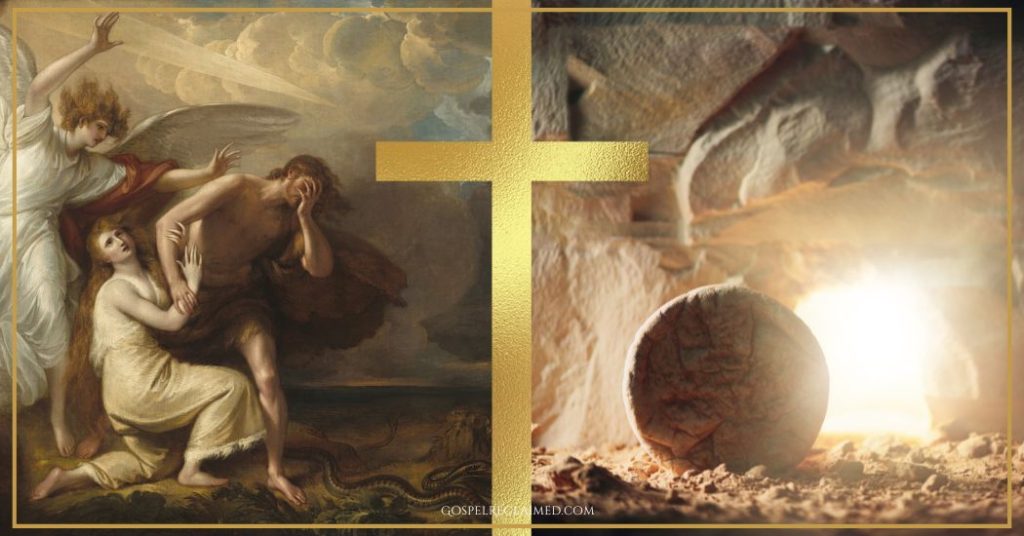
In 1 Corinthians 15, Paul calls Jesus the “Last Adam”, not as the final man in a sequence, but as the consummation of humanity itself.
The word last dares to suggest that the story which began with a fall in a garden finds its resolution at the cross and its new beginning in a tomb rolled open.
“The first man Adam became a living being; the last Adam became a life-giving spirit… The first man was from the earth, a man of dust; the second man is from heaven.” — 1 Corinthians 15:45, 47
The first Adam represents humanity fractured.
The last Adam represents humanity’s fulfillment and re-creation.
Then Paul makes a bold claim:
“Just as we have borne the image of the man of dust, we shall also bear the image of the man of heaven.” — 1 Corinthians 15:49
Since all humanity finds its origin, meaning, and destiny in Jesus Christ, prayer should proceed from the newness of life born from above in the Spirit, not as though we were still defined by our broken state.
To know more about this, read my article The Last Adam: Born Into an Empty Tomb.
The Lamb of God and Lion of Judah
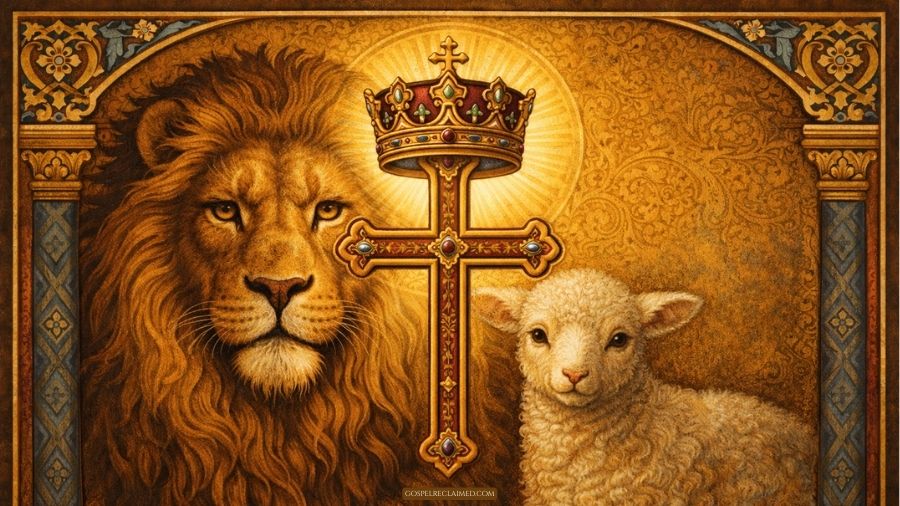
Jesus is revealed in Scripture as both the Lamb of God and the Lion of Judah, two images deeply rooted in the Hebrew imagination and held together without contradiction.
In Hebrew culture, the sacrificial lamb symbolized innocence, obedience, and substitutionary life. It stood at the center of Israel’s worship, especially in the Passover, where the lamb’s blood signified atonement and deliverance from death.
* The lamb represented a life given in surrender, restoring fellowship between God and His people and affirming that reconciliation comes through God’s provision, not human effort.
Jesus is identified as this Lamb who bears away sin and death on behalf of the world:
“Behold, the Lamb of God, who takes away the sin of the world!” — John 1:29
* The lion, by contrast, symbolized kingship, authority, strength, and rightful dominion. It represented royal leadership exercised with legitimacy and courage, and was associated with the tribe of Judah and the promise of an enduring Davidic rule:
“Judah is a lion’s cub… the scepter shall not depart from Judah.” — Genesis 49:9–10
In Revelation, Jesus is announced as the Lion, yet revealed as a Lamb:
“The Lion of the tribe of Judah… has conquered. And I saw a Lamb standing, as though it had been slain.” — Revelation 5:5-6
Our prayer rests upon His royal victory, secured through His perfect and self-giving love.
He is the Way, the Truth, and the Life
Jesus declares:
“Jesus saith unto him, I am the way, the truth, and the life: no man cometh unto the Father, but by me.” — John 14:6 (KJV)
This verse is often treated as a doorway humanity must discover from the outside, as though Jesus were merely offering a path to those wise enough to choose it. But in the larger witness of Scripture, Jesus is not simply inviting humanity to find the way; He becomes the Way by bringing humanity near in Himself.
The Way is not first a moral path, religious system, or set of steps. The Way is a Person who has entered our distance, carried our estrangement, and opened communion with the Father through His own life, death, resurrection, and ascension. In Him, humanity is brought near:
“But now in Christ Jesus ye who sometimes were far off are made nigh by the blood of Christ.” — Ephesians 2:13 (KJV)
He is also the Truth—not merely truth as information, doctrine, or correct belief, but Truth as reality unveiled. In Jesus, God is made known as He truly is, and humanity is revealed according to its true origin and destiny. This Truth is not destined to remain hidden forever. Scripture speaks of a day when the knowledge of God fills creation:
“For the earth shall be filled with the knowledge of the glory of the LORD, as the waters cover the sea.” — Habakkuk 2:14 (KJV)
And Paul writes that God “will have all men to be saved, and to come unto the knowledge of the truth” — 1 Timothy 2:4 KJV
The Truth is not merely something we defend; it is the reality all will finally come to know in Christ.
He is also the Life. Not biological existence alone, but zōē—the divine life of God, resurrection life, life that death cannot possess. Jesus does not merely point toward life as a future possibility; He embodies the life that has already entered death and overcome it. In Adam, humanity came under death; in Christ, humanity is raised into life:
“For as in Adam all die, even so in Christ shall all be made alive.” — 1 Corinthians 15:22 (KJV)
This means John 14:6 is not merely an invitation to discover a path, agree with a doctrine, or receive life as an external reward. It is the proclamation of what Jesus has accomplished in Himself: He has made the way, revealed the truth, and brought life to humanity. Faith awakens us to live from this completed reality.
To pray in the name of Him who is the Way, the Truth, and the Life means praying from nearness rather than distance, from unveiled reality rather than confusion, and from resurrection life rather than fear of death.
The Alpha and The Omega
Jesus identifies Himself as the Alpha and the Omega: the first and last letters of the Greek alphabet.
Alpha marks the beginning, the source from which all things arise.
Omega marks the end, the goal toward which all things move.
Together, they signify origin and fulfillment, commencement and completion, purpose and destiny.
“I am the Alpha and the Omega,” says the Lord God, “who is and who was and who is to come, the Almighty.” — Revelation 1:8
John’s Gospel places Jesus precisely within this framework:
“He was in the beginning with God. All things were made through him, and without him was not any thing made that was made.” — John 1:2–3
If Jesus is truly the Alpha and the Omega, then creation’s beginning and its end share the same center.
Scripture consistently presents history as a movement toward restoration and fulfillment.
Peter speaks of “the restoration of all things” (Apokatastasis) toward which God has been working since the world began (Acts 3:21).
Paul echoes this vision when he writes that the end comes when all things are brought into proper order, and God is “all in all” (1 Corinthians 15:28).
He further describes God’s purpose as the summing up of all things in Christ, things in heaven and things on earth (Ephesians 1:10), and the reconciliation of all things through Him (Colossians 1:19–20).
To pray in the name of the Alpha and the Omega is to pray from within this assurance: the Omega completes what the Alpha originates. He is history’s meaning and its resolution. What begins in Him moves toward its completion in Him. He is both the source from which life flows and the fulfillment toward which all things are being gathered.
The Prince of Peace
When we read or hear the word peace, we often think of it as the absence of war, fear, or anxiety. Yet the biblical word shalom carries a far richer and deeper meaning, and Jesus embodies all that shalom is.
Shalom speaks of a state in which nothing is missing and nothing is broken:
- Wholeness
- Well-being
- Completeness
- Health
- Restoration
- Harmony in relationships
- Flourishing life in every dimension
In Scripture, a prince is a ruler endowed with authority, one who governs and establishes order. To call Jesus the Prince of Peace — שַׂר־שָׁלוֹם (sar-shalom), literally Ruler of Shalom — is therefore to reveal the nature of His rule.
To pray in the name of the Prince of Shalom is to pray with confidence in His restorative reign. Jesus establishes the healing of what has been fractured; He rules through reconciliation, restoration, and wholeness—beginning with us and extending to those around us.
“True peace requires taking what is broken and restoring it to wholeness, whether it is in our lives, our relationships or in our world.”
– The Bible Project
The Bible Project explores the word Shalom in depth in less than four minutes:
The Substance of the Name of Jesus
“Wonderful Counselor, Mighty God, Everlasting Father, Prince of Peace.” — Isaiah 9:6
Taken together, these titles do not describe functions the Messiah performs; they declare who He is. Isaiah presents the coming Christ not as a lesser agent of God, but as the embodied presence of God Himself, wise beyond human comprehension, mighty in divine power, eternal in life-giving care, and ruling through restorative peace.
The Son of God and the Son of David
As the eternal Son, Jesus embodies the fullness of divine life and authority. Born within the lineage of David, He stands as the promised heir through whom God fulfills His covenant with Israel—the One to whom the throne, kingdom, and enduring reign were pledged. In Him, the royal promises find their completion, not merely as historical succession, but as the faithful realization of God’s word through the Davidic line (Matthew 1:1; Romans 1:3–4; 2 Samuel 7:12–13).
He is the Son of Man
The Son of Man affirms Jesus’ full humanity—born of woman, sharing our nature, experience, and condition in every way. Yet His humanity is not defined by separation, but by perfect union with the Father. He lives the human life as it was always intended to be lived: dependent, receptive, and fully aligned with God. In Him, we see not only what humanity has become, but what it was created to be. As both representative and fulfillment, He embodies a humanity restored to communion and entrusted with the authority and dominion given from the beginning (Daniel 7:13–14; Philippians 2:6–8; Hebrews 2:14; Luke 24:39).
He is grace
The most common Hebrew word translated as grace is ḥēn (חֵן), which conveys favor, kindness, acceptance, and relational goodwill—the disposition of one who freely turns toward another in generosity. Closely related is ḥesed (חֶסֶד), often rendered steadfast love or lovingkindness, describing covenantal loyalty expressed through faithful, life-giving action. Jesus embodies the fullness of both. Grace, in Him, is not abstract or transactional but personal, present, and restorative. (John 1:16–17)
He is light of men and the light of the world
Biblically, light signifies life, truth, revelation, and the exposure of what is hidden. Jesus is the Light that enters darkness, dispelling deception and illuminating reality as it truly is. To encounter Him is to see God clearly and to see ourselves truthfully. (John 1:4; John 8:12)
He is the bread that comes from heaven and the bread who gives life to the world
Biblically, bread represents sustenance, provision, and life itself. Jesus identifies Himself as the bread from heaven, echoing the manna given in the wilderness. He gives divine life that nourishes, sustains, and restores the whole person. He is the bread given for the life of the world. (John 6:33, 35, 48–51)
He is the door
A door implies access, safety, and belonging. When Jesus calls Himself the door, He is declaring that entry into life, protection, and pasture are found in Him. He is the point of passage from confinement into freedom, from exclusion into communion. (John 10:9)
Our Passover Lamb
As the Anointed One who gives Himself, Jesus delivers from death and bondage, fulfilling the Passover and inaugurating a new covenant through His self-giving life (1 Corinthians 5:7; Exodus 12:13).
He is the rock, the foundation, and the cornerstone
Jesus is the spiritual Rock who sustained the World, the only foundation upon which life and faith stand, and the cornerstone rejected yet made central to God’s redemptive work (1 Corinthians 10:4; 1 Corinthians 3:11; Psalm 118:22; Acts 4:11).
He is the good shepherd
Laying down His life for the sheep, Jesus knows, gathers, protects, and leads His flock with sacrificial love, in contrast to false shepherds who exploit, abandon, or scatter those entrusted to their care (John 10:11, 14).
He is the true vine
Jesus is the living source from which fruitfulness flows, and those who abide in Him share His life, bearing lasting fruit through union with the Father, the vinedresser (John 15:1–5).
He is the Deliverer who comes from Zion
In fulfillment of prophecy, Jesus turns away ungodliness and establishes covenant faithfulness, bringing salvation and restoration through His appearing. Born from the tribe of Judah and the lineage of David, He fulfills Israel’s calling to be the vessel through whom God’s salvation enters the world—hence Jesus’ declaration, “Salvation is from the Jews” (John 4:22; Romans 11:26; Isaiah 59:20).
He is the Root of Jesse, the Root of David, and the Offspring of David
As both the source from which David’s line springs and the promised heir who fulfills it, Jesus embodies the origin and the culmination of the royal covenant. In Him, promise and fulfillment converge, signaling the dawning of a new creation and the faithful completion of what God spoke through Israel (Isaiah 11:1, 10; Romans 15:12; Revelation 22:16).
Rabbi and King of Israel.
Recognized by Nathanael as both authoritative teacher and rightful King, Jesus fulfills Israel’s messianic hope with divine insight and royal authority (John 1:49; Isaiah 9:6–7)
He is the bright Morning Star
As the rising light that announces a new day, Jesus heralds hope, guidance, and renewal—marking the end of darkness and the arrival of God’s promised future for humanity (Numbers 24:17; Revelation 22:16).
He is the Resurrection
This title embodies both the Firstborn from the dead, and at the same time the Firstborn of all creation. Jesus embodies resurrection life as the one who conquered death and holds preeminence over all things, originating creation and inaugurating new life for humanity (John 11:25; Colossians 1:15, 18; Revelation 1:5).
He is the faith that came
Through His incarnation, faithfulness, and redemptive work, Jesus brings and fulfills the faith that justifies—marking the transition from the law as guardian to Christ as the substance and source of true trust (Galatians 3:23–25).
Jesus, the founder and perfecter of our faith
As the originator who pioneers the way and the completer who brings it to fulfillment, Jesus sustains our faith through His finished work and ongoing intercession (Hebrews 12:2).
Jesus is the apostle and high priest of our confession
Sent by the Father as the ultimate messenger and serving as the faithful mediator, Jesus represents God to humanity and humanity to God, securing reconciliation through love and faithfulness (Hebrews 3:1).
To pray in the light of who Jesus is—as the fullness of grace, light, life, and nourishment—is to pray from a place of rest and trust, confident that all wisdom, power, provision, guidance, healing, and protection are already our portion and inheritance in Him.
“Before Abraham Was, I AM”
“Before Abraham was, I am” — John 8:58
The statement reaches beyond chronology and invokes the language of divine identity. The phrase “I am” directly echoes the name revealed to Moses at the burning bush:
“I AM WHO I AM.” — Exodus 3:14
The claim is not about age or precedence, but about existence that precedes and transcends Abraham’s history.
אֶהְיֶה אֲשֶׁר אֶהְיֶה (Ehyeh Asher Ehyeh)
- אֶהְיֶה (Ehyeh) — I am / I will be (first-person singular of the verb הָיָה hayah, “to be”)
- אֲשֶׁר (Asher) — who / that / which
In Exodus, this name discloses God as self-existent, unbound by time, and faithful in presence. By speaking this name of Himself, Jesus places His identity within the same revelatory space.
To pray in the name of the I AM is to pray beyond the constraints of time itself, resting in the eternal One who precedes all history, in whom humanity was already destined to belong as children of God before time began.
Jesus — The Fullness of God in Earthly Form
Jesus is the visible embodiment of God’s fullness, creator of all things and the true God through whom life is revealed and shared.
1 John 5:20 — “And we know that the Son of God has come and has given us understanding, so that we may know him who is true; and we are in him who is true, in his Son Jesus Christ. He is the true God and eternal life.”
Colossians 1:16 — “For by him all things were created, in heaven and on earth, visible and invisible, whether thrones or dominions or rulers or authorities—all things were created through him and for him.”
Luke 1:32 — “He will be great and will be called the Son of the Most High. And the Lord God will give to him the throne of his father David.”
The Father is called Theos (God).
Ephesians 4:6 — “One God (Θεός) and Father of all…”
Romans 1:7 — “… Grace to you and peace from God (Θεός) our Father…”
Galatians 1:1 — “… through Jesus Christ and God (Θεός) the Father…”
Jesus was also called Theos:
John 1:1 — “The Word was God (Θεός).”
Hebrews 1:8 — “But of the Son He says, ‘Your throne, O God (ὁ Θεός), is forever and ever…’”
Titus 2:13 — “… the appearing of the glory of our great God (Θεός) and Savior, Jesus Christ.”
Colossians 2:9 — “In Him dwells all the fullness of deity (θεότητος) bodily.”
Now, God is ONE, yet revealed in the Man Jesus Christ and active through His Spirit—a mystery I cannot fully grasp or explain.
1 Timothy 2:5 — “There is one God, and one mediator between God and men, the man Christ Jesus.”
1 Corinthians 15:24–28 — “Then the Son Himself will be subjected to Him who put all things under Him…”
Romans 8:34 — “Christ Jesus… is at the right hand of God, interceding for us.”
This reflection opens onto a deeper biblical claim: not only Jesus is called us Theos (Θεός), He also told us that we–humanity– are Theos (Θεός), and that one day we’d know that we are in Him and Him in us and in the Father.
“‘I said, you are gods (Θεός)’… He called them gods, …and Scripture cannot be broken…” — John 10:34–35
That’s a much bigger mystery to understand since we can only see ourselves as individuals, mere mortal men. Like Jesus, we are vessels of clay carrying the divine presence.
“But we have this treasure in jars of clay, to show that the surpassing power belongs to God and not to us.” – 2 Cor 4:7
Scripture offers more support to these claims:
2 Peter 1:3–4 — “His divine power has given to us everything… so that through them you may become partakers of the divine nature…”
John 17:21–22 — “…that they may all be one, just as You, Father, are in Me, and I in You… that they may be one even as We are one.”
Because we are in union with Him, when we pray we do so from the same relationship and authority before the Father; as Scripture declares, “as He is in this world, so are we,” participants in His divine life, identity, and power.
P.S. I see the nuclear family as a possible reflection of this reality: the Father (revealed through paternal language), the Spirit (feminine in Hebrew grammatical form, often associated with life-giving and nurturing presence), and the Son (the firstborn of the new creation—the archetype of a humanity that bears God’s image, shares His indwelling presence, and participates in His divine life). In this sense, families reflect a union marked by love, intimacy, shared purpose, and fruitfulness. ⚠️This remains my own theological reflection, offered with humility as analogy rather than assertion.
Prayer – Relational
Let’s first understand what the Bible even meant by prayer.
The verb to pray – προσεύχομαι (proseúchomai) is a combination of two words
- πρός (pros) — facing, toward, in the direction of
- εὔχομαι (eúchomai) — to speak aloud, declare, profess, assert, vow, or express a wish or intention
In classical Greek usage, εὔχομαι (eúchomai) was commonly used for public declarations, personal claims, vows, or articulated hopes. When combined with πρός (“toward”), the term conveys the idea of directed expression—speech oriented toward someone—rather than ritualized petition, formulaic prayer, or distance from the divine.
It is important to demystify the idea of prayer being something “spiritual” or ritualistic. Prayer is us expressing our thoughts to the God who is within, not somewhere in the sky. Prayer is children sharing in the life of the Father through communication.
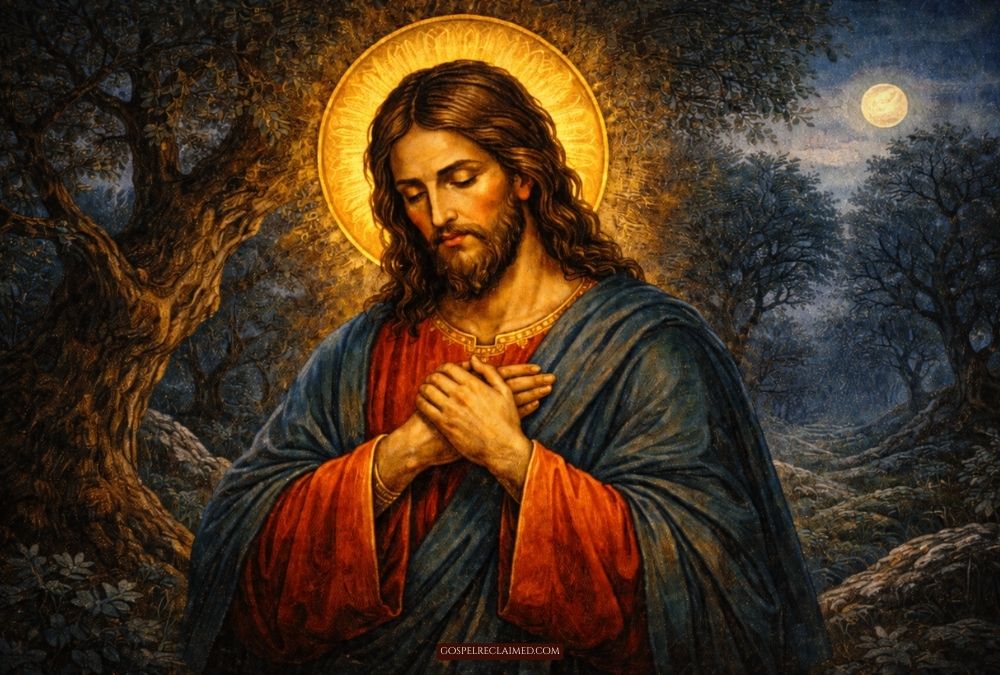
Praying in the Name of Jesus
What does it mean to pray in the name of the God who embodies salvation, deliverance, dominion, self-giving love, truth, restoration, healing, power, oneness with the Father, etc?
When we pray in Jesus’ name, we are calling upon everything He is and everything His name represents. To pray in His name is to come before the Father with trust in the fullness of Christ Himself.
Prayer, therefore, is not primarily centered on listing needs and concerns, but on confession and confidence—the recognition that He already is everything we need. We cry out in His name with the expectation that all that He is will be made present within our troubles and tribulations.
Jesus made promises we often overlook for lack of understanding:
“Therefore I tell you, whatever you ask in prayer, believe that you have received it, and it will be yours.” — Mark 11:24
“And I will do whatever you ask in my name, so that the Father may be glorified in the Son.” — John 14:13
Perhaps these words feel distant because His name has been reduced in our thinking. First, obscured through translation, and second, treated as a label rather than a shared reality and authority entrusted to us.
Jesus taught reliance on His name. Paul taught awareness of who Christ is, and that He is with us and for us:
“And whatever you do, whether in word or deed, do it all in the name of the Lord Jesus, giving thanks to God the Father through him.” — Colossians 3:17
Paul brings this understanding to its fullest expression with a remarkably bold statement:
“For all the promises of God find their Yes in him. That is why it is through him that we utter our Amen to God for his glory.” —2 Corinthians 1:20
Here, Paul declares that every promise God has ever spoken finds its fulfillment and confirmation in Jesus Christ. Christ is God’s definitive “Yes”—the assurance that what God has promised is certain, secure, and irrevocably established.
The human response, Paul says, is the “Amen” (so be it, it is true). To say Amen is to agree with what God has accomplished in Christ, trusting its validity and living from its reality. In this exchange—God’s Yes in Christ and humanity’s Amen through Him—God’s faithfulness is revealed, and God is glorified.
May we learn to pray in the name of Jesus with awakened confidence, trusting that all God has promised is already Yes in Him, and daring to say Amen with the expectation that all He is will be manifested in our lives.
Extra Content:
1- The Lord’s Prayer
The Lord’s Prayer is not a formula to persuade God, but a reorientation of the heart—awakening us to who God is, who we are in Christ, and the shared life already given. It teaches us to pray from union, not for access.
“Our Father who art in heaven”
Prayer begins with relationship shared, inclusive, and familial. Father names God not as distant authority but as intimate source. Our establishes communion, and in heaven speaks of God’s unseen, but present reality and life.
“Hallowed be thy name”
The name represents the fullness of who He is. To hallow His name is to stand in awe of His being, to recognize, trust, and align with His true character as fully revealed in Jesus.
“Thy kingdom come”
This is the welcoming of the reign God has already inaugurated within us. It expresses openness to God’s life, order, and reality breaking into our present experience.
“Thy will be done on earth as it is in heaven”
God’s will is good, pleasing, and perfect. By acknowledging His goodness and His purpose to work all things toward good, we consent to participate in the harmony that already exists in God’s realm.
“Give us this day our daily bread”
This is a prayer of trust. God is acknowledged as the provider of all that sustains life: material, relational, and spiritual.
“And forgive us our debts, as we forgive our debtors”
Forgiveness is a shared reality. As we receive God’s forgiveness, we participate in extending it, releasing others from the same burdens that have been lifted from us.
“And lead us not into temptation, but deliver us from evil”
This expresses reliance rather than fear. God is trusted as the One who preserves, guards, and rescues His children from destructive paths.
2 – WWJD – Talk to The Father Like Jesus
“Your Father knows what you need before you ask Him.” – Matthew 6:8
“Father, I thank You that You have heard Me. I knew that You always hear Me.” –John 11:41–42
1 – Praying in a solitary place
“Very early in the morning, while it was still dark, He departed and went to a solitary place, and there He prayed.” – Mark 1:35
“He went up on the mountain by Himself to pray.” – Matthew 14:23
“And as He was praying alone, the disciples were with Him…” –Luke 9:18
2 – Praying with thanksgiving
“Father, I thank You that You have heard Me.” –John 11:41
“And He took the five loaves and the two fish, and looking up to heaven, He blessed them…” –Luke 9:16
“And He took bread, gave thanks, and broke it…” – Luke 22:19
3 – Praying as a conversational request
“Holy Father, keep them in Your name, which You have given Me.”
John 17:11
“I do not ask that You take them out of the world, but that You keep them from the evil one.”
John 17:15
“My Father, if it is possible, let this cup pass from Me; nevertheless, not as I will, but as You will.”
Matthew 26:39
👉 FOOTNOTES:
- Scripture records names as a narrative device to reveal calling, identity, and transformation:
Moses — means “drawn out” of water, foreshadowing his role as a deliverer—especially in leading Israel through the waters of the Red Sea (Exodus 2:10; 14:21-22).
Samuel — means “heard by God,” pointing to his role as prophet through whom God’s voice would be restored to Israel (1 Samuel 1:20; 3:19-21)
David — means “beloved,” anticipating his identity as the chosen king and the prototype of the beloved royal son (1 Samuel 13:14; 2 Samuel 7:12-16)
Names that were changed to match new identity and vocation:
Abram → Abraham (Genesis 17:5)
The shift from “exalted father” to “father of a multitude” redefines identity around promise, naming what God pledged he would become.
Sarai → Sarah (Genesis 17:15)
From “my princess” (limited, possessive, private) to “princess”—a name expanded beyond one household to royal motherhood for nations.
Jacob → Israel (Genesis 32:28)
The name change marks a transformation from “supplanter” or “heel-grabber” to one reshaped through encounter, emerging as a prince before God.
New Testament echoes of the same “name logic”:
Simon → Peter (John 1:42)
A new name tied to a vocation—rock or stone, pointing to his role in the building of the early community.
James and John → Sons of Thunder (Mark 3:17)
A name reflecting temperament and zeal—intensity, boldness, and prophetic force.
Boanerges — “Sons of Thunder” (Mark 3:17)
A name reflecting character and temperament, later reshaped by discipleship.
Click here to return to the text: ↩︎
Psalm 2:6–7– “As for me, I have set my King on Zion, my holy hill.”
Isaiah 9:6–7 – “Of the increase of his government and of peace there will be no end, on the throne of David…”
Zechariah 9:9 – “Behold, your king is coming to you… righteous and having salvation.”
Matthew 2:2 – “Where is he who has been born king of the Jews?”
Luke 1:32–33 –“The Lord God will give to him the throne of his father David… and of his kingdom there will be no end.”
Revelation 19:16 – “King of kings and Lord of lords.”
Click here to return to the text: ↩︎
Hebrews 2:17 – “He had to be made like his brothers… to become a merciful and faithful high priest.”
Hebrews 4:14 – “We have a great high priest who has passed through the heavens, Jesus, the Son of God.”
Hebrews 7:24–25 – “He holds his priesthood permanently… he always lives to make intercession.”
Hebrews 9:11–12 – “Christ appeared as a high priest… by means of his own blood.”
Click here to return to the text: ↩︎
Isaiah 61:1 – “The Spirit of the Lord GOD is upon me, because the LORD has anointed me…”
Luke 4:18–21 – “Today this Scripture has been fulfilled in your hearing.”
John 6:14 – “This is indeed the Prophet who is to come into the world!”
Acts 3:22–23 – “Moses said, ‘The Lord God will raise up for you a prophet like me…’”
Click here to return to the text: ↩︎
FAQs
What does the Name of Jesus actually mean in the Bible?
In Scripture, the Name of Jesus is not a label but a revelation. It declares who He is—God’s saving presence embodied—and carries His identity, authority, promises, and purpose, not merely a sound to be spoken.
What does it mean to pray “in the name of Jesus”?
Praying in the name of Jesus means praying in alignment with all that He is—His grace, authority, restoration, and faithfulness. It is not a formula, but trust in the reality His name represents.
Why is Jesus called the Alpha and the Omega?
Jesus is called the Alpha and the Omega because He is both the source and the fulfillment of all things. Everything begins in Him and moves toward completion in Him, giving history its meaning and destiny.