
⚠️ Every post begins with a question and grows from my ongoing search to know God and understand His purpose for humanity. What you read here reflects my current view—born from study and wonder—and I often revisit and update my writings as I continue to learn and see more clearly.
For years, I saw “sin” as a list of bad choices: breaking God’s rules, stepping out of line, racking up mistakes on a spiritual scorecard.
The pressure was relentless: keep the list short, repent quickly, and pray you’re “right” with God at the end. But what if we’ve been missing the deeper truth? What if sin isn’t about what we do—but who we are?
How We’ve Been Taught to See Sin
Most of us grew up thinking sin is about behavior: wrong actions, thoughts, or choices.
The Greek word hamartia, often translated as “sin” in the New Testament, is commonly defined as “missing the mark”—like an archer failing to hit the target.
This view turned sin into a moral checklist, fueling a guilt-driven system of behavior management. But this focus on rules misses something deeper.
Scripture suggests sin’s consequences aren’t divine punishment but the natural result of living disconnected from our true selves:
- Romans 1:27 — “… receiving in their own persons the due penalty of their error.”
- Galatians 6:8– “For the one who sows to his own flesh will from the flesh reap corruption.”
- James 1:15 —“… desire when it has conceived gives birth to sin, and sin when it is fully grown brings forth death.”
- Romans 6:23 — “For the wages of sin is death…”
- John 8:34 —“… everyone who practices sin is a slave to sin.’”
Sin leads to bondage and decay, not because God pushes us away, but because we drift from the life we were created for.
The behavior-focused view persists because rules are easier to measure than identity, and fear of chaos drives us to control actions. Yet scripture points to a profound truth: sin is more than mistakes, it’s a rupture in who we are.
A Deeper Look at Hamartia
Let’s unpack hamartia.
In ancient Greek stories, it meant a tragic mistake that led to a hero’s downfall. Early Christians adapted it to describe sin, but its roots may go deeper.
Some scholars suggest hamartia combines ha- (like “dis-,” meaning separation) and martia (from meros, meaning “portion” or “origin”).
Sin, then, isn’t just missing the mark, it’s disconnection from our divine origin, a forgetting of our God-given identity.
The Old Testament echoes this. Hebrew words for sin like chatta’ah (“missing the way”), pesha‘ (“rebellion”), and ‘avon (“iniquity”) describe more than bad behavior, they point to straying from God’s path, breaking relationship, and distorting the divine image within us.
Sin is less about rule-breaking and more about identity-breaking.
“Sin is the failure to realize what we are and the good that is our nature.”
— Gregory of Nyssa, On the Beatitudes
Sin as Spiritual Amnesia
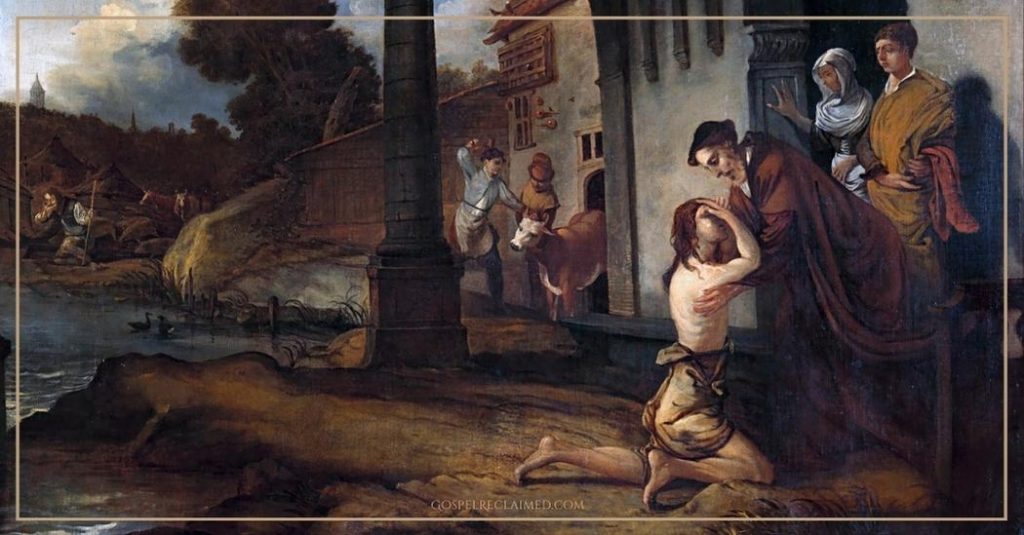
Think of the prodigal son. He didn’t just make bad choices, he lived as if he didn’t belong in his father’s house. Sin is like that: spiritual amnesia, forgetting we’re God’s children. It’s not rebellion for its own sake but a departure from our true nature.
Early Christian thinkers saw it this way too:
Origen: “The soul that departs from God falls into sin, not by being punished, but by turning toward nothingness.” (On First Principles)
Gregory of Nyssa: “Sin is the result of the soul forgetting its nature.” (The Great Catechism)
When we miss the mark, we don’t need punishment, we need realignment.
Freedom from sin comes from remembering who we are:
“God’s workmanship, created in Christ Jesus for good works” (Ephesians 2:10).
Walking in the Spirit isn’t about effort, it’s about waking up from the fog of identity amnesia.
Coming Home
If sin is disconnection from our divine essence—from the life and identity we have in God—then people aren’t inherently evil.
They are:
- Lost: “All of us like sheep have gone astray.” — Isaiah 53:6
- Blind: “being darkened in their understanding, excluded from the life of God because of the ignorance that is in them, because of the hardness of their heart.” — Ephesians 4:18
- Caught in delusion: “…but they became futile in their reasonings, and their senseless hearts were darkened. Claiming to be wise, they became fools,” — Romans 1:21-22
- Trapped in false identities: “and they exchanged the glory of the incorruptible God for an image in the form of corruptible men… They exchanged the truth of God for a lie, and worshiped and served the creature…” — Romans 1:23, 25
Our call, then, isn’t to condemn, but to awaken and remind others of their meros—their allotted portion, their true inheritance in God.
“In Him we also have obtained an inheritance, having been predestined according to the purpose of Him who works all things in accordance with the plan of His will.” —Ephesians 1:11
“My flesh and my heart may fail, but God is the strength of my heart and my portion forever.”— Psalm 73:26
Here’s how to begin:
- Pause and Reflect.
When guilt or shame rises, pause and affirm your true identity: “I am God’s beloved child, created and redeemed for wholeness and union with Him.”
Let this truth become a daily prayer of remembrance:
“See what great love the Father has lavished on us, that we should be called children of God! And that is what we are!” — 1 John 3:1
- Share the Truth.
When someone feels defined by their failures or brokenness, gently remind them that they bear God’s image, destined for love, purpose, and glory.
“God created man in His own image, in the image of God He created him…” — Genesis 1:27
The gospel isn’t about escaping punishment; it’s about coming home to who we’ve always been in God.
“I will get up and go to my father…” — Luke 15:18
It’s a call to awaken to our divine identity and to live from the abundant life that flows from our Creator—the love, joy, and peace that are the natural fruit of restored union.
“And the peace of God, which surpasses all comprehension, will guard your hearts and your minds in Christ Jesus.” — Philippians 4:7
So let’s live and proclaim this truth with gentleness and hope, because one day, we all will fully remember who we are.
“All the ends of the earth will remember and turn to the Lord, and all the families of the nations will worship before You.” — Psalm 22:27
“so that at the name of Jesus every knee will bow… and that every tongue will confess that Jesus Christ is Lord, to the glory of God the Father.” —Philippians 2:10-11
And in that day of perfect remembrance, every lost child will come fully home, blind eyes opened, false identities shed, and all creation rejoicing in the eternal portion that was always theirs in Christ.
If sin is forgetting who we are, then healing begins with remembering, and that topic is explored more deeply in Who Is In Christ?
FAQs
What does sin mean?
The Greek word hamartia, often translated as “sin” in the New Testament, is commonly defined as “missing the mark”—like an archer failing to hit the target.
What does hamartia mean?
The Greek word hamartia, often translated as “sin” in the New Testament, is commonly defined as “missing the mark”—like an archer failing to hit the target.
What are the words for sin in the Old Testament?
Hebrew words for sin like chatta’ah (“missing the way”), pesha‘ (“rebellion”), and ‘avon (“iniquity”) describe more than bad behavior—they point to straying from God’s path, breaking relationship, and distorting the divine image within us.