“Good souls — many — will one day be horrified at the things they now believe about God.” — George MacDonald
The Christian doctrine of eternal hell is the most wicked and disgusting idea that ever crawled into the Christian faith. I do not mean “unpleasant.” I mean morally deranged. I mean anti-Gospel. I mean a slander against the God who is love and just.
Yes, I’m familiar with the words translated as ‘hell’ [Sheol, Hades, Gehenna, Tartarus] in many Bibles, but none of them point to the medieval torture chamber we were taught to imagine. I’ll ignore the translation train-wreck for now. I’ve addressed that elsewhere (link at the bottom of this page).
Few ideas have darkened the name of God more than the doctrine of eternal torment. For centuries, the good news was twisted into a message of fear, painting our loving Father as a cosmic tyrant who burns His own children forever.
Now, to the point: my disgust.
This post is not simply a theological debate, but an exposure of how wicked, contradictory, and demonic the idea of eternal conscious torment (ECT) is.
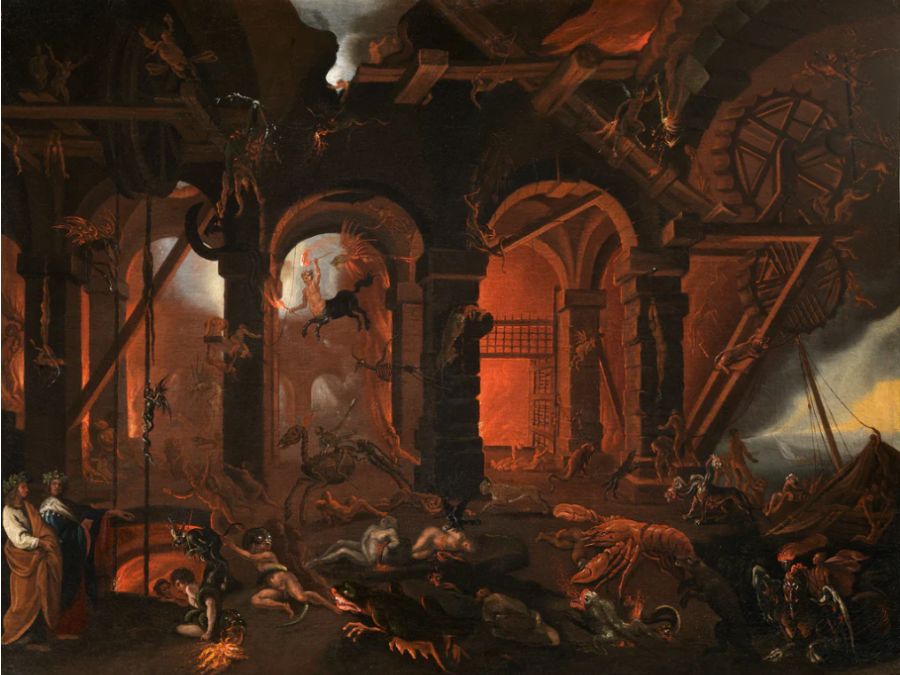
This doctrine—”Hell”, the eternal inferno—did not come from Jesus, the prophets, or the apostles. It was forged in the furnace of Greek philosophy, Roman politics, and Latin mistranslations, then refined through medieval imagination into the nightmare we know today.
The result was a religion of fear rather than freedom; a gospel of terror rather than transformation. It shaped civilizations, fueled inquisitions, justified control, and drove many away from the very God whose mercy endures forever.
But truth always finds its way through the smoke. When we return to the Hebrew roots, the words of Jesus, and the faith of the early followers, the illusion collapses, and what remains is the radiant message of restoration, not everlasting torture.
No, I’m not saying “nothing matters,” or that sins have no consequences; they DO. Scripture teaches that we reap what we sow. I’m saying that God’s judgment is about setting things right, not institutionalizing evil forever.
There is no such thing as eternal punishment.
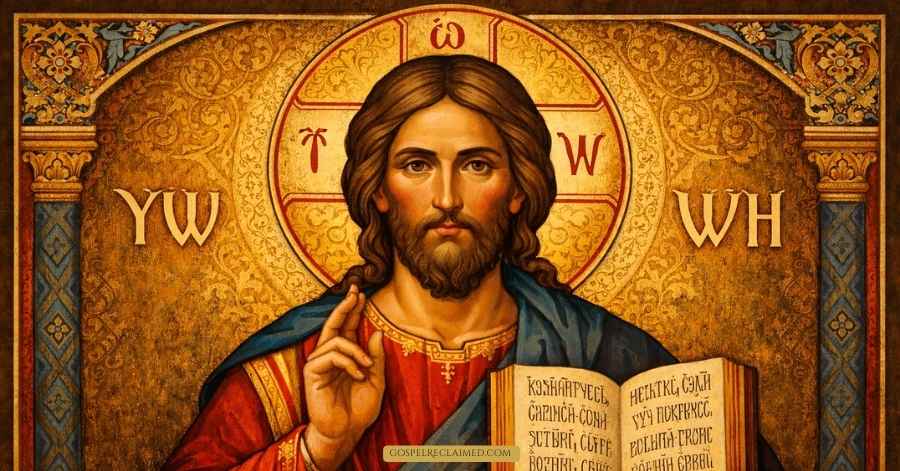
Jesus is the Omega —the End; therefore, all things find their end in Him.
A Forgotten Clue at the Beginning
Before Christianity inherited the dualistic, paganized idea of eternal torment, Scripture gives us a very different picture, beginning with the first human being.
Luke is explicit:
“…Adam, the son of God.” — Luke 3:38
Adam was created not as a servant, but as a beloved son sharing life with his Father. As with any good parent, God sought Adam’s flourishing, security, and growth through a trusting relationship.
So God gave Adam a warning, not a threat:
“You may freely eat of every tree… but of the tree of the knowledge of good and evil, you shall not eat; for in the day you eat of it, you shall surely die.”
— Genesis 2:16–17
That is the language of a loving parent saying:
“Don’t touch the hot stove, not because I’ll punish you if we do, but because IT will burn you.”
Nowhere does God say:
“If you disobey Me, I will torture you for eternity.”
“If you eat this, I will send you to everlasting hell.”
“If you fall, I will unleash divine retribution.”
That monstrous idea comes from later religion, not from the Father of Jesus and Adam.
For a deeper look into sin (hamartia) and its ontological meaning, see: Missing the Mark — The True Meaning of Hamartia
Adam Was Burned, The Father Rushed in to Heal The Wound
Adam “touched the burning stove,” and humanity was scorched by the consequences of mistrust, not divine retaliation. And what did the Father do?
He did not count Adam’s failure against him.
He did not abandon His creation.
He did not create a hell to punish the injured.
Instead:
“God was in Christ reconciling the world to Himself,
not counting their trespasses against them.” — 2 Corinthians 5:19
Jesus came to heal Adam, not condemn him.
To restore what was burnt.
To rescue His children from the consequences of the disobedience, not from the Father Himself.
The doctrine of eternal torment has no place in the story of Genesis, no place in the mind of ancient Israel, and no place in the heart of the Father revealed in Jesus Christ.
Where The Doctrine Came From
1) The Greek invasion of Hebrew thought
The Hebrews understood Sheol as a shadowy realm of the dead, simply the grave, the end of mortal breath, a waiting place shared by both the righteous and the wicked. No flames. No torment. No eternal despair.
When Greek philosophy mingled with Hebrew faith, everything shifted. Plato taught that the soul is immortal and must be rewarded or punished forever after death. In his writings, Hades and Tartarus became moral prisons—concepts utterly foreign to Scripture.
As Christianity spread through the Greek-speaking world, these ideas slipped into theology. Some early thinkers adopted them to make the Gospel more “philosophically respectable.” Others, like Origen, insisted judgment was purifying and temporary: a refining fire, not a furnace of vengeance. But as the Church moved westward, Greek metaphysics took deep root.
What did “death” mean to ancient Israel?
Old Covenant people had no concept of eternal conscious torment.
To them, death was simply death: the end of breath, the dissolving of life, the return to dust.
“The dead do not praise the LORD, nor any who go down into silence.” — Psalm 115:17
“In death there is no remembrance of You; in Sheol who will give You thanks?” — Psalm 6:5
“The living know that they will die, but the dead know nothing.” — Ecclesiastes 9:5
“Man lies down and does not rise; till the heavens are no more…” — Job 14:12
“For Sheol cannot thank You, death cannot praise You.” — Isaiah 38:18
Israel did not imagine God tormenting people forever.
They feared nonexistence, not eternal torture.
Resurrection hope came much later in biblical revelation.
But “hell,” as preached today, never entered the Hebrew imagination at all.
Even David confessed, “if I make my bed in hell, behold, thou art there.” (Psalm 139:8 KJV) showing that ancient Israel believed God’s presence extended even into death, not that Sheol was a realm of eternal torment.
And when Scripture speaks of judgment, it describes it as corrective, not endless:
“…For when Your judgments are in the earth, the inhabitants of the world learn righteousness.” — Isaiah 26:9
2) Rome’s hijacking of Christianity
How the Latin Church, Augustine, and imperial religion turned philosophy into dogma and used “hell” to control the masses
When the center of faith shifted from Jerusalem to Rome, the message of Jesus was no longer guarded by those who heard His voice but by emperors, bishops, and philosophers who saw in religion the perfect instrument of the Empire.
The communal Ekklesia (Church)—a Spirit-led body of equals—was gradually replaced by an institution of hierarchy and fear. The language of love gave way to the language of law. Greek ideas about the immortality of the soul, once speculative, were baptized into Latin dogma, and the Gospel of reconciliation was rewritten as a system of rewards and punishments.
The turning point came with Augustine of Hippo (4th–5th century). Trained in Neoplatonism, he read Scripture through the lens of Plato more than the lens of Christ: two realms—one pure and eternal, the other corrupt and temporal—and souls fixed eternally in one or the other.
From imperial Rome Augustine inherited an obsession with authority, submission, and control. Combine the two, and you have the perfect soil for the doctrine of eternal punishment.
What began as philosophical speculation became state-sanctioned theology. After Constantine merged Church and Empire, the message of Jesus—“Love your enemies, forgive seventy times seven”—was retooled to defend imperial power. To question the Roman Church was to rebel against God; to disobey its hierarchy was to risk eternal damnation.
Hell became the whip of orthodoxy. It made peasants pay indulgences, armies fight crusades, and scholars keep silent. It filled cathedrals with terror rather than worship and turned salvation into a transaction => grace for obedience, heaven for submission, safety for conformity.
The Latin Vulgate cemented the confusion. Words like “Gehenna” and “Hades” were fused under infernum (“the lower regions”), which English later rendered as hell.
Translators didn’t just mistranslate; they reshaped the imagination of the West.
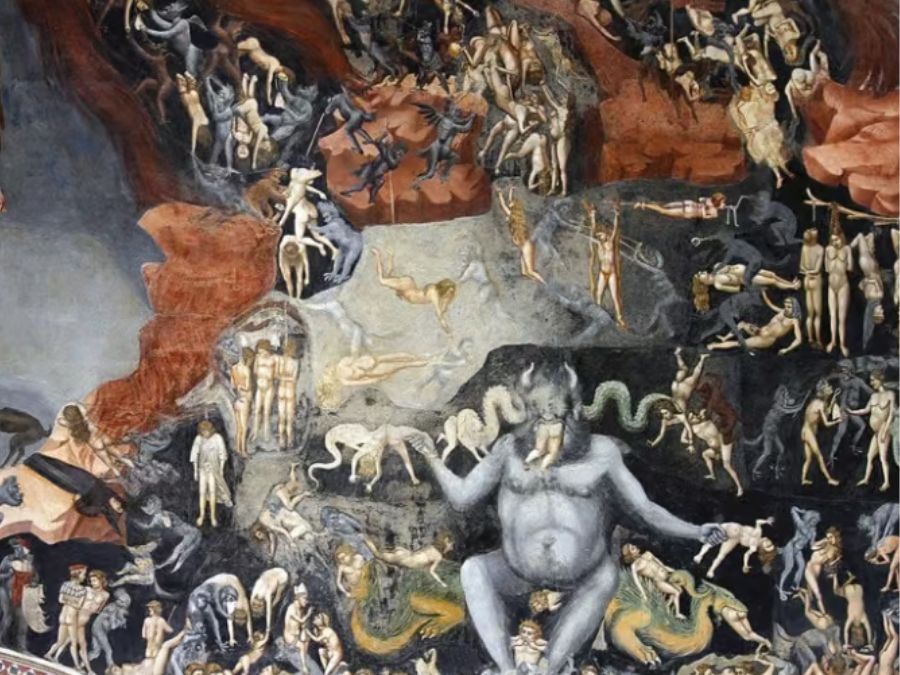
Thus, by the Middle Ages, the doctrine of hell had become a central pillar of Western Christianity.
The Church no longer announced the reconciliation of all things in Christ, but the endless separation of the saved and the damned. Eternal torment became a divine necessity, not a pagan myth. And the God who in Christ descended into death to bring life to the world became, in sermons, a monarch who maintains an eternal prison for His enemies.
From the palaces of popes to the pulpits of reformers, this idea endured because it worked—it controlled the soul through fear. As long as hell remained eternal, no one could question the system that claimed to offer the only escape from it.
Will the “Gates of Hell” Prevail?
Jesus didn’t speak ambiguously:
“I will build My ekklesia, and the gates of ‘hell’ shall not prevail against it.” — Matthew 16:18
Did Jesus overstate it?
If eternal hell is the final reality, then those gates do prevail, either a little or a lot.
But Jesus said they won’t. I believe Him!
Scripture’s arc says that death and hell are destroyed (Revelation 20:14).
The last enemy is abolished, not accommodated (1 Corinthians 15:26).
So whatever ‘hell’ symbolizes, it is not an eternal co-kingdom alongside Christ’s reign, but an earthly enemy destined to collapse under the weight of His victory.
When human compassion exposes a false god
My sister once said, “If my daughters are going to hell, I choose to go with them!”
Is a mother more loving toward her children than God?
My husband—a former atheist, still discovering Jesus—said to me with absolute sincerity:
“If God can coexist with hell, I don’t want to be near Him. How could I enjoy heaven knowing billions of people are being tortured?”
Is his compassion toward people he never met—people he didn’t create or father—greater than God’s?
When fallen human grace and empathy surpass the character of the God you worship, something is catastrophically wrong with your theology.
We are told, “God is love but also just”, as if justice were the enemy of love.
“God’s wrath is not the opposite of His love.
God’s justice is not the opposite of His mercy.” — C. Baxter Kruger
If your doctrine forces love and justice to fight each other, the problem is not God, the problem is your doctrine.
Endless torment is the antithesis of endless mercy. If Jesus abolished death and destroyed the works of the devil, then hell cannot be evil’s eternal victory lap.
God’s opinion about burning people:
- Jeremiah 32:35 — “The burning of sons and daughters is something He did not command, and it never entered His mind.”
- Jeremiah 19:5 — “Which I commanded not, nor spake it, neither came it into my mind.”
We know that God is love (1 John 4:8). That doesn’t mean He simply loves or could love; it means He is love itself—incapable of acting outside of love, because love is not what He does; it is who He is.
1 Corinthians 13:4–8 (NLT) — substituting “God” for “love” (to illuminate God’s nature):
God is patient and kind.
God is not jealous or boastful or proud or rude.
He does not demand His own way.
He is not irritable, and He keeps no record of being wronged.
He does not rejoice about injustice but rejoices whenever the truth wins out.
God never gives up, never loses faith, is always hopeful, and endures through every circumstance.
Prophecy and speaking in unknown languages and special knowledge will become useless. But God will last forever!
The only eternal reality is our God, who will wipe away every tear and be all in all.
Hell and death will be consumed in the fire of God’s redeeming love.
His plan has always been to restore His image and likeness in His creation, not to destroy it.
The doctrine I refuse to bless (the logic collapses)
Eternal torment demands I accept all of the following:
- Omnipresence vs. an eternal furnace. God is omnipresent, yet supposedly hosts an everlasting torture chamber inside His presence. Where exactly does hell exist if God fills all in all? Inside Him? Beside Him? In a corner of the new creation He refuses to remake?
- “All tears wiped away” vs. unending tears somewhere else. Do I have to believe that promise is partial? No way.
- A new heavens and new earth with a permanent annex of infinite horror. Show me where that fits with an eternal torture chamber “somewhere else.”
- Heaven’s joy coexisting with knowledge that loved ones are in endless conscious torment. Call it “mystery.” I call it heartless.
- ‘Imago Dei’ demolished. The very ones God knitted in the womb, made through Him and for Him, bearing His image and breath, are allegedly tortured forever by either
a) a devil God can’t restrain —so He’s weak, or
b) a fire God chooses not to put out — so He’s limited and cruel. - “Consuming fire” contradiction. If the Fire is God’s own being—not the devil’s—are we saying God’s nature powers hell endlessly? So He is celebrated by the redeemed while simultaneously incinerating the lost—who, by the way, are the very ones Jesus came to save? That’s moral schizophrenia.
- Finite life, infinite penalty. This is a big one. Not even the broken justice systems of fallen men punish all wrongdoing with life imprisonment or death. Sins of 30, 67, or 83 years receive infinite punishment? That isn’t justice; it is an abomination that collapses the very meaning of justice itself.
- Summary strike:
To believe that eternal punishment can coexist with the eternal reign of joy, peace, and love is to deny the very character of God and the finished redemptive work of Jesus Christ.
The Hypocrisy of “Exceptions”
If eternal torment is truly God’s plan, then why does the system suddenly require loopholes?
Are we to believe that the God who “shows no partiality” (Deut. 10:17) somehow makes selective exemptions?
Hell-theology survives only by inventing carve-outs, a maze of special cases designed to soften a system that is, at its core, morally indefensible.
- Unborn children: spared?
- Age of innocence: turn 13 and you’re on your own?
- A 10-year-old who commits murder: which rule applies now?
- Severe mental disability: exempt? partially? Does autism or ADHD qualify?
- Amazonian tribes who never saw a Bible or heard of Jesus—exception?
- North Koreans forced to worship a dictator or die—responsible for unbelief?
- Muslims trained from birth under threat to reject Christianity—what rule applies to them?
- Abused kids who only met “Christianity” as terror——do they get a compassion exception?
- What about centuries when the Bible was hidden from the public—do they get a pass too?
How many exceptions before you admit the rule itself is a monstrosity—and unclear?
If salvation is by “hearing and believing the Gospel,” are we now grading by geography, trauma, IQ, language, and century of birth? That isn’t the righteousness of God; it’s a cosmic lottery.
Do you see the absurdity of Christians in the West—enjoying religious freedom and access to education, with as many Bible versions as we want—condemning the majority of the world to ‘hell’, or inventing exceptions for those without knowledge of the Gospel to avoid everlasting torture?
Theology of privilege!
I grew up being taught that, in cases like these, God would judge people according to their hearts. So at least half the world is judged by their own “tree of the knowledge of good and evil”??? That’s double standards.
“To show partiality in judgment is not good.” — Proverbs 24:23
If the words “church”, “satan”, and “hell” alone had been translated correctly, we would have had a completely different human history over the last two millennia.
“They Chose It” — The Cruelty Cover-Up
“God doesn’t send anyone to hell; they choose it”, the modern Christian slogan born out of C. S. Lewis’s line, “Hell is locked from the inside.”
No, they don’t choose infinite torment with perfect clarity, and you know it!
People choose what they can see from where they are, hemmed in by ignorance, abuse, fear, culture, propaganda, mental illness, and a lifetime of distortion.
- Christian madness (satire):
“For God so loved the world—that is, repentant believers—that He sent His own Son in our place to make salvation available. And whosoever manages to believe in the invisible, true God among roughly 4,000 religions, shall not be tortured forever in hell, but be saved (terms and conditions may vary by denomination).”
What a gibberish gospel! No wonder the world walks away.
To call that “choosing eternity in torment” is absurd and spiritual malpractice.
And Scripture exposes this lie for what it is:
1) The only eternal reality is our God, not ECT
- Deuteronomy 33:27 — The eternal God is thy refuge…
- Psalm 90:2 — from everlasting to everlasting, You are God.
- 1 Timothy 6:15–16 — He alone possesses immortality.
2) Twisting the nature of God and truth
- Matthew 23:13 — shutting the kingdom in people’s faces.
- Romans 2:24 — God’s name blasphemed among the nations because of religious hypocrisy.
- Matthew 9:13 — I desire compassion, not sacrifice.
3) All suffering and death have a deadline
- Revelation 21:4 — every tear wiped away; death no more.
- Isaiah 25:8 — He will swallow up death for all time.
- 1 Corinthians 15:28 — that God may be all in all.
4) His plan has always been to restore His creation
- Acts 3:21 — the restoration of all things.
- Romans 8:19–21 — creation set free into glory.
- Revelation 21:5 — all things made new
The Ugliest Version: Modern Calvinism
“For the time will come when people will not tolerate sound [healthy] doctrine… they will accumulate for themselves many teachers… and will turn their ears away from the truth and wander off into myths.” — 2 Timothy 4:3–4 (AMP)
Let’s stop pretending. In its modern form, Calvinism teaches that God creates most people with NO CHANCE! NONE! to escape eternal hell, and that the “saved” will rejoice as the damned burn because it “displays God’s justice and mercy.”
If there is a doctrine more demonic, I haven’t met it—one that more thoroughly hijacks the Gospel and turns grace into a cruel lottery. This is not “good news.” It is the annihilation of good with a Bible verse taped on top.
- Calvinism madness (satire):
“For God so loved the world—‘world’ meaning the chosen few—that He killed His own Son to save a handful of predestined lucky ones. And whosoever is chosen will be irresistibly manipulated to believe and prove their election by works—so they shall not be tortured forever in hell with those the Loving God created for eternal fire, just to prove His grace toward the elect.”

The Final Insult: A Failed Christ
The doctrine of eternal hell declares the Incarnation ineffective. That is blasphemy!
It mutters that the Cross was powerful, but limited, depending on fallen man’s will;
that the Resurrection was victorious, but death and hell will still claim the majority.
If the Cross cannot end what Adam began, then sin, not grace, has the final word.
If sin continues to rule in any corner of creation forever, then the Lamb of God did not take away the sin of the world (John 1:29; 1 John 2:2).
- If death and destruction go on without end, then evil has achieved eternal coexistence with God.
“But false prophets also arose among the people, just as there will also be false teachers among you, who will secretly introduce destructive heresies… and because of them the way of the truth will be maligned.” — 2 Peter 2:1–2 (NASB)
Mic drop, Peter! Say it louder for the people in the back!
Hell-theology turns the triumph of God into a split universe—Christ reigning in one realm while darkness reigns in another—as if the blood that “reconciled all things in heaven and on earth’ (Col 1:19–20) only worked once people managed to free themselves from deception and death.
And that, dear reader, is NONSENSE.
Everything about this doctrine is NONSENSE! intellectually, morally, spiritually.
It lurches from contradiction to contradiction and asks us to call that “good and just.”
There is no eternal kingdom of darkness if Christ’s reign is without end.
There is no everlasting rebellion if all things will be summed up in Christ.
There is only the Lamb who sits upon the throne, and every creature in heaven, on earth, and under the earth joining in the song:
“…blessing and honor and glory and dominion forever and ever!” — Revelation 5:13
The good news proclaims—it does not merely make possible—the reversal of Adam’s fall, the undoing of death, the restoration of all things, and the victory of life over every form of darkness.
- Hell belongs to the old creation, the one that passed away when the stone rolled aside.
The Cross was not a partial rescue. It was the collapse of every distance between God and creation, the end of alienation of mind, the death of death itself.
“He disarmed the rulers and authorities and made a public spectacle of them, triumphing over them in the cross.” — Colossians 2:15
“He abolished death and brought life and immortality to light through the gospel.” — 2 Timothy 1:10
The Gospel proclaims total triumph, not conditional and limited success.
Christ did not descend into death to rescue a few, leaving billions behind; He went to the lowest depths to fill all things with Himself.
That is the Gospel.
And anything less is a denial of Christ’s finished work.
My Line in The Sand
“Woe to those who call evil good, and good evil; who substitute darkness for light and light for darkness; who substitute bitter for sweet and sweet for bitter!” — Isaiah 5:20 (NASB)
I refuse to attribute this obscenity to the Father of Jesus.
I refuse to call endless torture “holy justice.”
I refuse to numb my conscience to make room for a doctrine that would shame any earthly parent.
Eternal hell is the most evil doctrine of all time.
It slanders God, contradicts the Gospel, and denies Christ’s finished and cosmic triumph over Adam’s legacy.
“So then, as through one offense the result was condemnation to all mankind, so also through one act of righteousness the result was justification of life to all mankind. For as through the one man’s disobedience the many were made sinners, so also through the obedience of the One the many will be made righteous.”—Romans 5:18-19 (NASB)
I will not bless it with silence, and I refuse to call evil good.
This post is my gut-level verdict. If you need the word-study on the abomination of hell, I’ve done it. If you want the history, I’ve traced it. For the textual foundations of the words translated as ‘hell,’ see my extended study: Hell, The Real Story
FAQs
Where did the doctrine of hell come from?
This doctrine—”Hell”, the eternal inferno—did not come from Jesus, the prophets, or the apostles. It was forged in the furnace of Greek philosophy, Roman politics, and Latin mistranslations, then refined through medieval imagination into the nightmare we know today.
What does Sheol mean?
The Hebrews understood Sheol as a shadowy realm of the dead—simply the grave, the end of mortal breath, a waiting place shared by both the righteous and the wicked. No flames. No torment. No eternal despair.
What does Calvinism teach?
In its modern form, Calvinism teaches that God creates most people with NO CHANCE—NONE— to escape eternal hell, and that the “saved” will rejoice as the damned burn because it “displays God’s justice and mercy.”