⚠️ Every post begins with a question and grows from my ongoing search to know God and understand His purpose for humanity. What you read here reflects my current view—born from study and wonder—and I often revisit and update my writings as I continue to learn and see more clearly.
For much of Scripture, obedience appears straightforward: obey God’s commands and receive the corresponding blessing; disobey, and face the consequences. Yet the New Testament introduces language that seems to place obedience within an entirely different framework. Paul speaks of “obedience to the faith” (Romans 1:5), “the obedience of faith” (Romans 16:26), and even of being “obedient to the faith” (Acts 6:7).
So what happened to obedience when the Old Covenant gave way to the New? Does New Covenant obedience simply mean keeping God’s commands under a different system, or does the coming of Christ fundamentally change what obedience means and upon whose obedience the covenant rests?
And when Paul tells us to bring “every thought to the obedience of Christ” (2 Corinthians 10:5), is he calling us to greater personal performance—or pointing to something deeper?
To answer these questions, we need to examine obedience within its biblical and covenantal context, tracing the movement from the Law to faith, from the demands placed upon humanity to the role of Christ Himself, and from external command to the kind of obedience Paul describes under the New Covenant.
Obedience in Its Covenant Context
When the Bible speaks of truth, we have to consider the context of that truth.
God truly commanded Noah to build an ark, but that command was not addressed to all humanity for all time. Likewise, the Mosaic Law truly required animal sacrifices, yet Christians today do not read Leviticus and start looking for a lamb.
The command may be true without being a command addressed to us. So when Scripture speaks of hearing, obeying, and walking in the truth, we have to ask:
Which truths carry into the New Covenant, and which belonged to a covenant that has passed away?
“If You” Under the Law
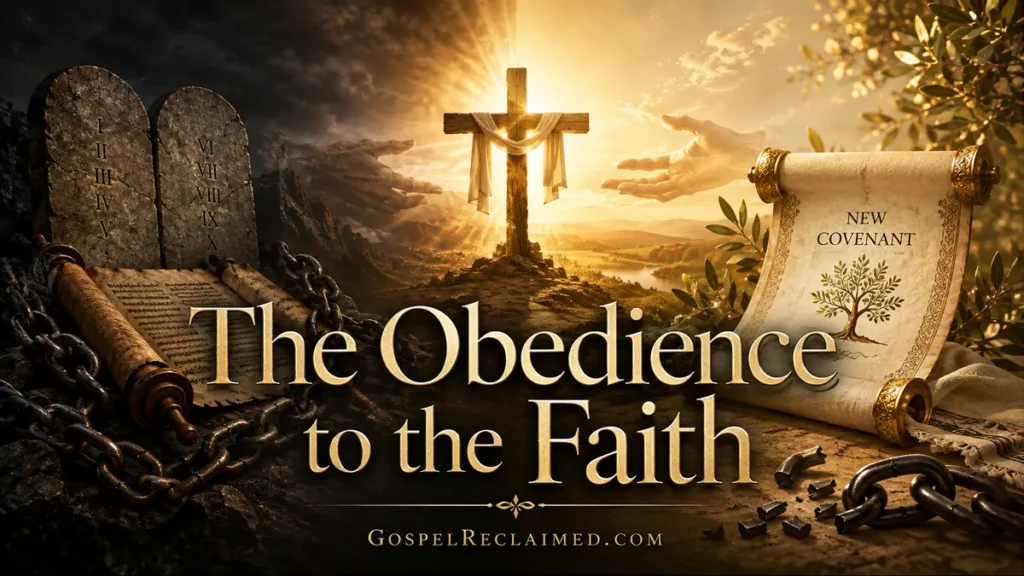
The covenant made with Israel at Sinai was governed by commandments that Israel was expected to hear, keep, and do.
“And it shall come to pass, if thou shalt hearken diligently unto the voice of the LORD thy God, to observe and to do all his commandments which I command thee this day… all these blessings shall come on thee, and overtake thee.” — Deuteronomy 28:1–2 KJV
The condition is explicit. The chapter then lists those blessings—prosperity in the land, fruitful crops, protection from enemies, abundance, and national stability. But the same covenant also contained the opposite consequence:
“But it shall come to pass, if thou wilt not hearken unto the voice of the LORD thy God, to observe to do all his commandments and his statutes which I command thee this day; that all these curses shall come upon thee, and overtake thee.” — Deuteronomy 28:15 KJV
Under this covenant, obedience and disobedience carried stated covenantal consequences.
And obedience did not mean keeping whichever commandments seemed most important. Israel stood under the Law as a whole.
Paul later summarizes the seriousness of that arrangement:
“For as many as are of the works of the law are under the curse: for it is written, Cursed is every one that continueth not in all things which are written in the book of the law to do them.” — Galatians 3:10 KJV
He then quotes the governing principle directly:
“And the law is not of faith: but, The man that doeth them shall live in them.” — Galatians 3:12 KJV
That phrase—“the man that doeth them”—captures the character of obedience under the Mosaic covenant. Obedience meant doing what that covenant required.
This is why biblical statements about obedience cannot be detached from their covenantal setting. When Moses called Israel to “obey the voice of the LORD,” he was calling them to keep the commandments, statutes, and judgments given through the Mosaic Law.
Hebrews 9:1 later describes this covenant as the first covenant and identifies it with its ordinances, priesthood, sanctuary, sacrifices, and regulations:
Under the Law, the language of obedience was unmistakably conditional:
“If thou shalt hearken…”
“If thou wilt not hearken…”
Covenant blessing depended upon human obedience to the whole Law—a vast body of commands governing sacrifices, dietary practices, purity, festivals, circumcision, Sabbath observance, civil life, moral conduct, and much more. The requirement was not simply to believe that the Law was true, but to do what it required.
The Obedience of One: Christ as the Foundation of the New Covenant
If obedience under the Old Covenant placed the responsibility upon those who were required to keep the Law, Paul introduces a strikingly different emphasis when he explains what God accomplished in Christ.
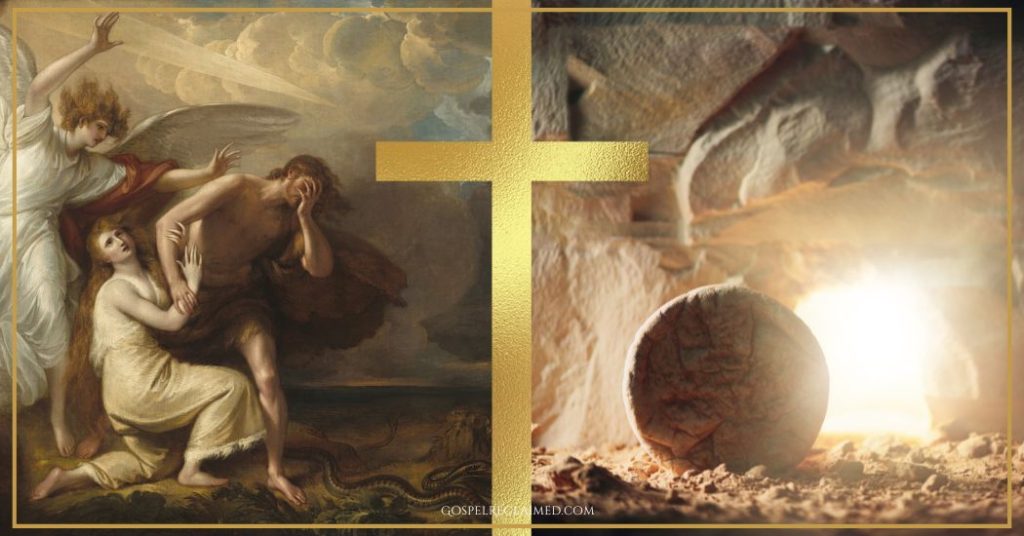
In Romans 5, he places Adam and Christ side by side and traces the consequences of each man’s act:
“Therefore as by the offence of one judgment came upon all men to condemnation; even so by the righteousness of one the free gift came upon all men unto justification of life.” — Romans 5:18 KJV
Paul then restates the comparison in terms of obedience:
“For as by one man’s disobedience many were made sinners, so by the obedience of one shall many be made righteous.” — Romans 5:19 KJV
The contrast could hardly be clearer. In both cases, Paul points to one representative act with consequences extending far beyond the individual who performed it.
Adam’s disobedience affected humanity.
Christ’s obedience does the same.
Paul places the determining act of righteousness upon “the obedience of one.”
From Human Performance to Christ’s Accomplishment
This is an important shift in the biblical story.
Under the Mosaic covenant, Israel was repeatedly instructed to hear God’s commandments and do them. Covenant faithfulness was measured by Israel’s obedience to what had been commanded.
But when Paul explains the foundation of righteousness in Romans 5, the decisive obedience is no longer presented as humanity successfully meeting those requirements. The emphasis moves to what Christ Himself accomplished.
Philippians describes that obedience in its fullest expression:
“And being found in fashion as a man, he humbled himself, and became obedient unto death, even the death of the cross.” — Philippians 2:8 KJV
Christ entered fully into the human condition and carried His obedience all the way through death. Paul therefore locates the foundation of the new reality not in humanity finally achieving perfect obedience, but in one Man who did.
This makes Romans 5:19 especially significant:
“…by the obedience of one shall many be made righteous.”
The verse directs our attention away from the question, How successfully has humanity obeyed? and toward a different question:
What did the obedience of Christ accomplish?
Paul’s Adam–Christ comparison depends upon that distinction. The first man’s disobedience established one condition; the obedience of the second establishes another.
The movement is not from imperfect human obedience to improved human obedience.
It is from Adam’s disobedience to Christ’s obedience.
That is why the New Covenant rests on a fundamentally different foundation. Its decisive act of obedience has already been rendered by Christ Himself. The Law revealed what humanity was required to do. Christ’s obedience reveals what one faithful Man accomplished on humanity’s behalf.
Before considering what the New Testament means when it speaks of our own obedience under this new covenant, that foundation has to remain clear: the New Covenant begins with the obedience of Christ.
What Does “Obedience to the Faith” Mean?
Having established Christ’s obedience as the foundation of the New Covenant, we can now turn to the language Paul uses concerning our response to it.
Romans opens with an interesting expression:
“By whom we have received grace and apostleship, for obedience to the faith among all nations, for his name.” — Romans 1:5 KJV
And Paul closes the same letter with remarkably similar language:
“…made known to all nations for the obedience of faith.” — Romans 16:26 KJV
The Greek expression hypakoē pisteōs joins obedience [hypakoē] with faith [pistis]. It has been variously understood as obedience that arises from faith, obedience characterized by faith, or faith itself understood as the proper response to the Gospel. Whatever nuance we emphasize, Paul is clearly placing obedience in relation to faith, rather than returning his readers to obedience to the Mosaic Law.
Acts uses even more direct language:
“And the word of God increased; and the number of the disciples multiplied in Jerusalem greatly; and a great company of the priests were obedient to the faith.” — Acts 6:7 KJV
In this context, “the faith” refers to the Gospel message the apostles were proclaiming. These priests had spent their lives within the religious system of the Law, yet Luke now describes them as becoming obedient to the faith.
Romans 6 gives us another helpful clue:
“But God be thanked, that ye were the servants of sin, but ye have obeyed from the heart that form of doctrine which was delivered you.” — Romans 6:17 KJV
Notice what had been obeyed: a form of doctrine that had been delivered to them. Something was proclaimed, heard, believed, and received from the heart.
This brings the idea of obedience much closer to hearing and responding to truth than simply performing a prescribed list of commands. In fact, the Greek verb hypakouō—to obey—is built around the idea of hearing and responding to what is heard.
That helps explain an exchange in John’s Gospel. When the crowd asks Jesus what they must do, they frame the question in the familiar language of works:
“What shall we do, that we might work the works of God?” — John 6:28 KJV
Jesus answers:
“This is the work of God, that ye believe on him whom he hath sent.” — John 6:29 KJV
They ask for the works God requires. Jesus directs their attention to the One God has sent.
This does not mean that faith becomes a replacement commandment by which humanity earns what Christ accomplished. That would simply turn faith into the new Law—one final human requirement upon which the success of the Gospel depends.
Faith does not accomplish Christ’s work; it responds to it.
🔎 For a deeper look at the distinction between what Christ accomplished for humanity and what we experience through faith, see Eternal Redemption vs. Experienced Salvation.
Paul has already located righteousness in “the obedience of one” (Romans 5:19). The obedience of faith is therefore a response to an accomplished reality, not a contribution required to complete it.
This distinction becomes particularly important when Paul says that the Romans had “obeyed from the heart” the doctrine delivered to them. The question is no longer merely whether a person has performed correctly, but whether the truth of the Gospel has been heard, trusted, and allowed to reshape the way that person understands God, humanity, and the work of Christ.
That connection between hearing, believing, and obedience leads naturally to another recurring New Testament idea: rest.
The Obedience of Faith as Rest
Hebrews develops the relationship between faith and obedience through Israel’s failure to enter the promised rest.
Speaking of that generation, the writer asks:
“And to whom sware he that they should not enter into his rest, but to them that believed not?” — Hebrews 3:18 KJV
He immediately explains:
“So we see that they could not enter in because of unbelief.” — Hebrews 3:19 KJV
The connection continues into the next chapter:
“For unto us was the gospel preached, as well as unto them: but the word preached did not profit them, not being mixed with faith in them that heard it.” — Hebrews 4:2 KJV
Again we find the same progression: a word is spoken, it is heard, and the issue becomes whether that word is trusted.
Hebrews then makes the relationship between faith and rest explicit:
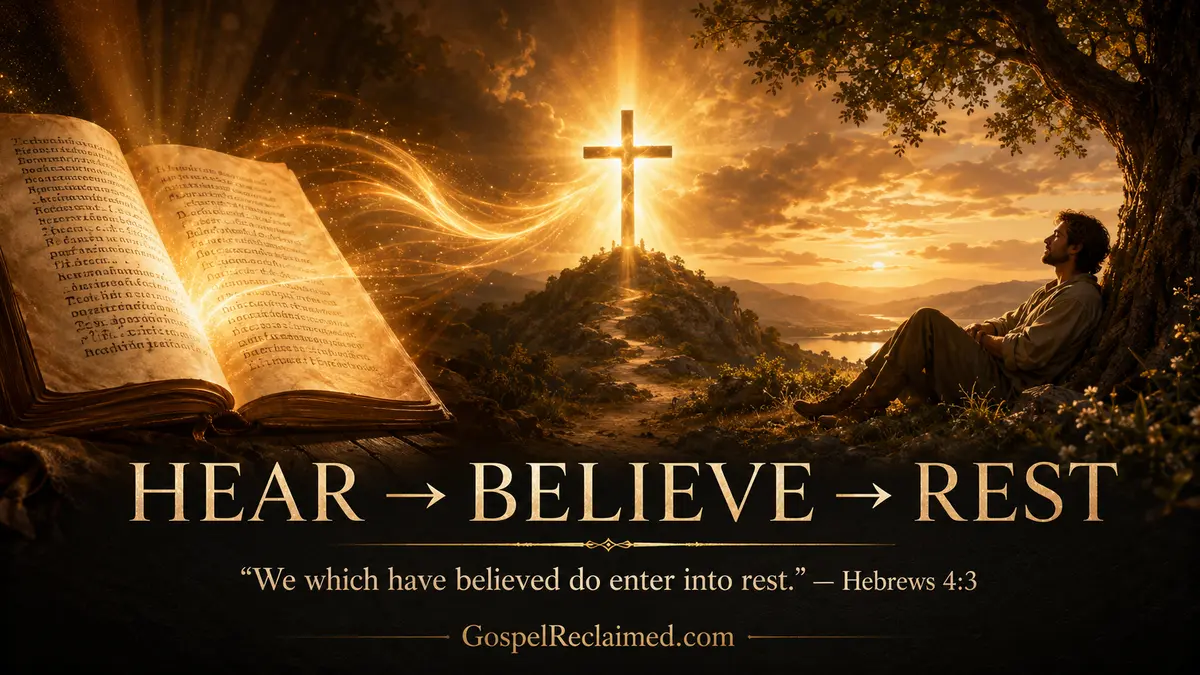
“For we which have believed do enter into rest…” — Hebrews 4:3 KJV
This gives obedience under the New Covenant a very different character from the covenantal performance described in Deuteronomy.
Rest does not mean passivity, indifference, or the absence of transformation. Hebrews itself can say:
“Let us labour therefore to enter into that rest…” — Hebrews 4:11 KJV
The paradox is deliberate. There is an effort involved in ceasing from the old instinct to establish ourselves through our own works and learning instead to trust what God has accomplished.
The writer had already described the nature of this rest:
“For he that is entered into his rest, he also hath ceased from his own works, as God did from his.” — Hebrews 4:10 KJV
The point is not that works disappear from Christian life. Their place and purpose change.
Love, forgiveness, generosity, service, and transformation are no longer the means by which we establish our standing before God. They arise from a life being shaped by what it has come to believe.
John expresses the order simply:
“We love him, because he first loved us.” — 1 John 4:19 KJV
The love is real, and so is our response. But the response does not create the reality that precedes it.
This is an important distinction when speaking about the obedience of faith. Faith is not passive in the sense of producing no effect. What we believe profoundly affects how we think and live. But neither is faith another system of religious performance by which we earn, activate, or complete the work of Christ.
It is the response of the heart to what has been heard.
And Hebrews gives that response a remarkably simple description:
entering into rest.
Taking Every Thought Captive to the Obedience of Christ
Paul brings the discussion of obedience directly into the realm of thought when he writes:
“Casting down imaginations, and every high thing that exalteth itself against the knowledge of God, and bringing into captivity every thought to the obedience of Christ.” — 2 Corinthians 10:5 KJV
The surrounding language matters. Paul is speaking about arguments, imaginations, knowledge, and thoughts—the ideas and assumptions that shape the way we understand God, ourselves, and the Gospel.
The Greek phrase translated by the KJV as “the obedience of Christ” is eis tēn hypakoēn tou Christou. Many modern translations render it “obedience to Christ,” taking Christ as the object of obedience. The KJV, however, preserves wording that also brings to mind an important Pauline theme already established in Romans 5:19: the obedience of Christ Himself.
Paul has already told us that righteousness rests upon “the obedience of one.” So whether 2 Corinthians 10:5 is understood primarily as obedience to Christ or in relation to the obedience of Christ, the larger framework remains the same: every thought must ultimately be brought into agreement with the truth revealed and accomplished in Him.
But what is that truth?
For Paul, the Gospel is not merely the announcement that Jesus died. It is the proclamation of what His death and resurrection accomplished.
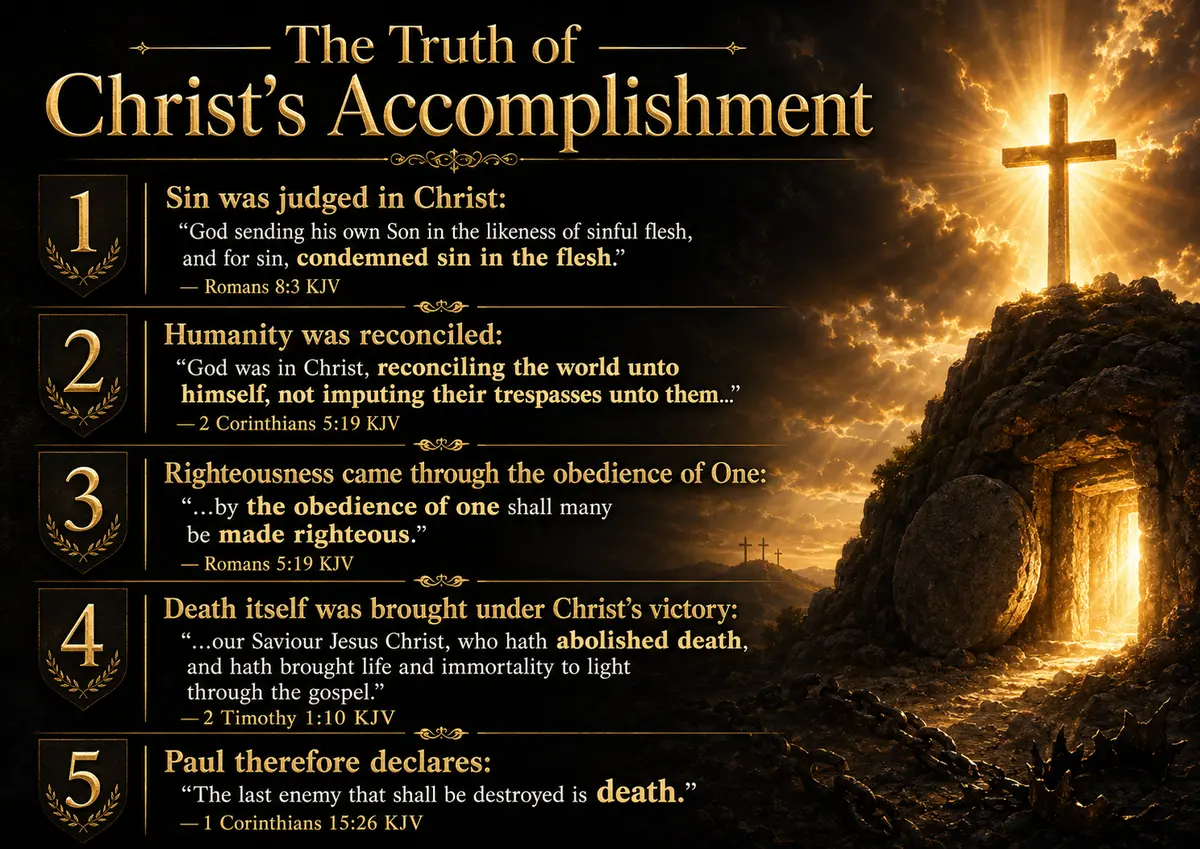
This is the truth to which faith responds.
The obedience of faith is not trust in a religious system, nor confidence in our ability to maintain sufficient obedience. It is trust in the triumph of Jesus Christ over the very powers that held humanity in bondage—sin and death.
That truth becomes the standard against which our thoughts and doctrines must be tested.
If a theological assumption treats sin as though Christ never dealt with it, it deserves examination.
If it speaks of humanity as though God were still imputing trespasses after Paul says He was reconciling the world to Himself, it deserves examination.
If it makes righteousness rest primarily upon our successful obedience after Paul has located it in “the obedience of one,” it deserves examination.
If it gives death the final word after the Gospel announces Christ’s victory over death, it deserves examination.
Taking thoughts captive, then, is much more than trying to suppress unwanted or negative thinking. It is bringing our understanding of God into conformity with the Gospel of Christ’s accomplishment.
Romans 6:17 helps clarify this:
“…ye have obeyed from the heart that form of doctrine which was delivered you.”
The obedience of faith is connected to a message that is heard, received, and believed. And the content of that message matters.
We are not being asked merely to believe something. We are responding to the Gospel—the announcement of what God has accomplished through Christ.
This is also why faith cannot become a new version of the Law. If the Old Covenant said, Do what is commanded and the covenant blessings will follow, the Gospel cannot simply replace that structure with, Believe correctly so that Christ’s victory will finally become effective. That would still place the determining condition upon humanity.
- Faith does not cause Christ to triumph over sin and death. Faith recognizes that He has.
- Faith does not reconcile the world to God. It receives the announcement that God was already in Christ doing so.
- Faith does not establish righteousness. It trusts the righteousness established through the obedience of One.
- And faith does not defeat death. It rests in the One who has brought life and immortality to light through the Gospel.
This is the ground upon which the obedience of faith stands.
Our thoughts, therefore, must continually be tested against the question: Do they agree with what God has accomplished in Christ, or do they quietly return us to a framework in which sin, death, or human performance still has the determining word?
That is the discernment Paul’s language invites.
The Truth We Stand On
Biblical obedience cannot be understood apart from covenantal context.
Under the Mosaic covenant, obedience meant hearing and doing what the Law required, with covenant blessings and consequences tied to that response. The New Testament, however, directs our attention first to the obedience of Christ and to what that obedience accomplished.
Paul’s Gospel announces that sin was condemned in Christ, the world was reconciled to God, righteousness was established through the obedience of One, and death itself was defeated through Christ’s death and resurrection. This is the truth to which the obedience of faith responds.
Faith does not complete that victory or make it true. It hears the Gospel and rests in what God has already accomplished.
That is why New Covenant discernment reaches even into our theology. Every doctrine, assumption, and interpretation must ultimately be tested against the revelation of Christ and the scope of His triumph.
When Paul tells us to bring every thought captive to the obedience of Christ, the question becomes more than whether our thoughts are religious, moral, or sincere.
The deeper question is whether they agree with the Gospel:
Has Christ truly accomplished what Scripture says He accomplished—and do our beliefs actually reflect the scope of His victory?
To explore how easily faith can become trapped in religious performance, watch Malcolm Smith’s short message, Jesus vs. Religion: The Spirit of the Pharisees.
FAQs
What does “obedience to the faith” mean in the Bible?
“Obedience to the faith” describes a response of trust to the Gospel rather than obedience to the requirements of the Mosaic Law. Paul connects obedience with hearing, believing, and receiving the truth of what God accomplished through Jesus Christ.
What is the difference between Old Covenant and New Covenant obedience?
Under the Old Covenant, Israel’s obedience meant keeping the commandments of the Law, with covenant blessings and curses attached to their performance. Under the New Covenant, the foundation is the obedience of Christ and the accomplishment of His death and resurrection.
What does “taking every thought captive to the obedience of Christ” mean?
In 2 Corinthians 10:5, Paul speaks of bringing thoughts, arguments, and assumptions into agreement with the knowledge of God revealed in Christ. This includes testing our theology against what Christ’s obedience accomplished through His triumph over sin and death.